

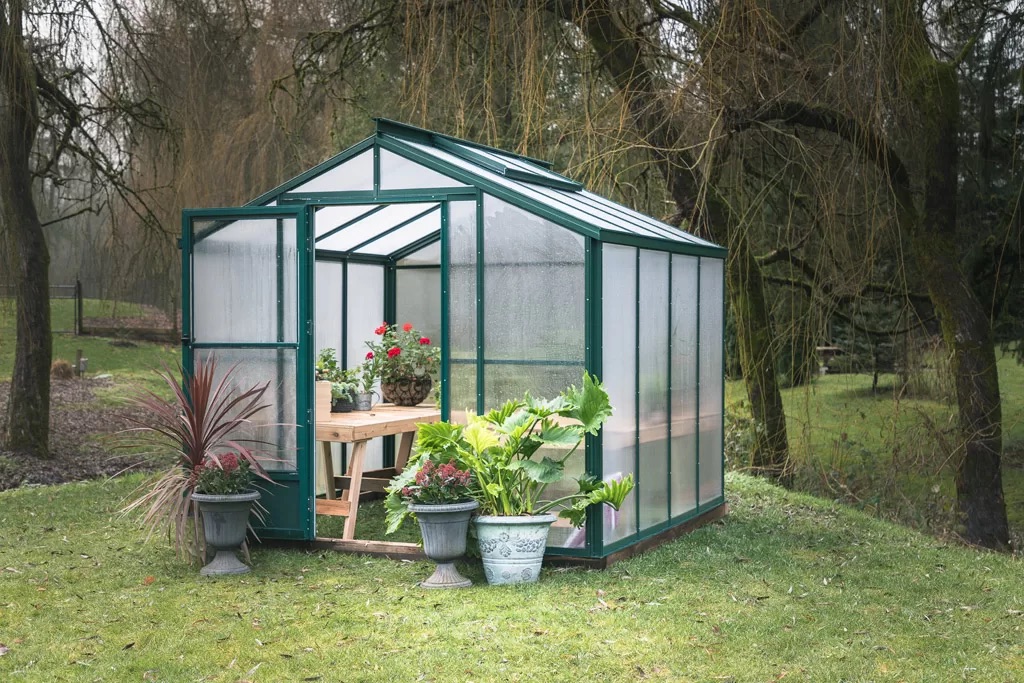

A greenhouse is more than a structure—it’s an investment in your lifestyle. But even the most elegant design will fail without one crucial element: the right foundation. Choosing wisely means your sanctuary will stand strong for decades.
A stunning greenhouse is only as strong and functional as its foundation. The wrong foundation can lead to rot, costly repairs, or even your greenhouse flying away. Greenhouses work best when they are secured and sealed to the ground, allowing you to completely control the environment.
The foundation of your greenhouse could be considered the most important factor in its longevity. In this article I will discuss the best ways to ground your greenhouse, so that you can make an informed decision.
Why The foundation matters
Having a solid foundation is important for several reasons.
- It gives you something to build off of
- It can keep unwanted rodents out
- It keeps your greenhouse on the ground
- It can match your home/aesthetic while doing all of the above.
There are other benefits as well, but these examples are simple and some that most greenhouse gardeners appreciate.
Things that you will need to consider before deciding on a greenhouse foundation are permitting requirements, what kind of water/utility access do you want in your greenhouse, site leveling, and so forth.
If you choose to work with us on the installation of your greenhouse, we will handle or help with permitting and will assist you in finding what you need to take care of it. We can also handle preparing for or running utilities like electrical and plumbing.
We typically like to leave all other site preparation (site leveling/excavation, pouring of concrete pad/foundation, irrigation set up, etc.) up to you, but if it makes your life easier, we will gladly take care of it.
If you are ready to build a greenhouse and you have a place in mind, we can do a site visit and discuss your utilities, permitting and site leveling needs.
The Most Common Greenhouse Foundation Types
These foundations are:
- Wood (cedar timbers or pressure treated)
- Concrete piers (round concrete columns that go beneath the frostline)
- Full concrete perimeter (can be a knee wall or ground level)
- Brick, stone, or pavers
Our manufacturers have recommended foundations for specific regions. These recommendations are based on frostline, wind load, snow load, etc. They usually recommend concrete foundations for frost lines that are below 12 inches deep.
You can also use treated wood for quick installation, as wood can be more accessible and user friendly than concrete. The right wood foundation can last around 15 to 20 years in a four season climate.
At Monarch Greenhouse Solutions, we like to recommend concrete foundations for added strength and durability. Typically we like to use insulated concrete forms (ICF) to help insulate the dirt inside your greenhouse while protecting the concrete walls.
Brick, stone, or paver foundations are great for DIY use as well because they are generally cheaper and more user friendly than concrete.
Greenhouse Flooring
Another part of a greenhouse foundation would be the flooring. There are several options and things to consider when choosing flooring for your greenhouse. The biggest thing to think about is what you plan to use the greenhouse for.
Concrete pads are great for greenhouses that are used for starting plants early, mixed uses such as sunrooms and atriums, or similar. They offer stability and a solid place for tables and garden benches. But remember, there is a lot of water in greenhouses so plan on including floor drains to keep mold and algae from growing.
Pavers or flagstone tend to drain better than concrete, are great for walking on, and like concrete, help with temperature control.
The best option for most greenhouse uses is gravel. It is cheaper, drains well, is compactable, and if you want to use raised beds, your garden can connect to the earth better. However, rodents and weeds can find their way into your greenhouse so it is important to lay a weed barrier to keep the unwanted out.
How to choose
At this point you may be overwhelmed by all of the options and use information. It’s tough to know what is best for you and your greenhouse application. Hopefully the next paragraphs will be a helpful guide.
- Firstly, you should decide what greenhouse style you want. Knowing the style of the greenhouse also answers questions like what you are going to use the greenhouse for, whether that is growing year round, starting your growing season early, or adding a unique feature to your yard that can be enjoyed in many ways.
When deciding the style you should also have in mind the potential size and location of the greenhouse that you are looking for.
- After you have decided on the style, size, and location, it is important to check with the manufacturers to see what they recommend for the size of the greenhouse and the region that you live in.
Oftentimes, manufacturers have recommendations or even requirements for foundations. For example, BC Greenhouse requires concrete footings for greenhouses 12’ x 20’ or bigger with double glass glazing.
Other regional recommendations are usually dependent on the frostline in your area.
- The next step that probably needs to be the first step, is to look at your budget. Wood foundations are the cheapest while concrete is the most expensive option. The in-between options are things like concrete piers or thicker, treated wood options.
If you find that you need a concrete foundation for your area, or your sanity, it might be necessary to adjust your budget to include it. We want to be sure you get a greenhouse that is strong and will last. Concrete foundations are a key piece to creating a greenhouse that will endure.
- Lastly, to help you decide, I would suggest creating a pros and cons list with your research. Listing out options with their benefits and disadvantages helps nail down the best option for you.
This is something you could share with one of our greenhouse experts to be sure that they understand your needs and can offer advice or help you get started on your project!
Conclusion
Hopefully this article taught you more about greenhouse foundation options and helps you decide on what will work best for your greenhouse. I touched on many things including foundation types, flooring types, and more!
Check out our blog post on customizing greenhouses to learn about other ways you can utilize a concrete foundation!
If you have any questions regarding this article, please reach out through the contact form and one of our greenhouse experts will gladly assist you. We would also love to help if you have a greenhouse project ready to go and just need direction on placement, foundation, interior systems, or anything greenhouse related.
Happy growing!